How to Build a Secure Node Js File Upload with Multer
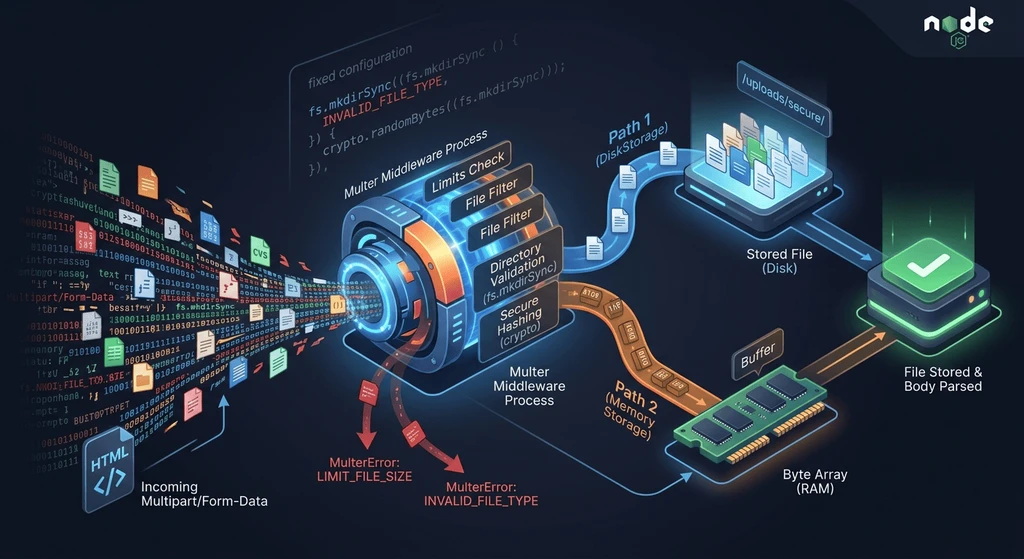
Learn how to build a secure node js file upload with multer. Process single or multiple file uploads, validate MIME types, and prevent server memory leaks
6 articles on JavaScript, covering fundamentals, patterns, and real-world use cases.
Learn how to build a secure node js file upload with multer. Process single or multiple file uploads, validate MIME types, and prevent server memory leaks
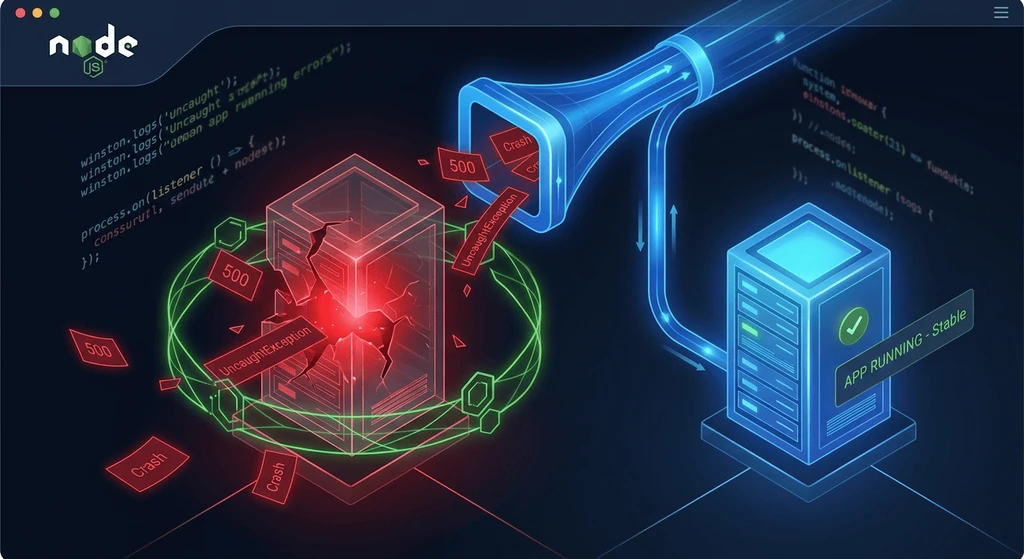
Error handling in Nodejs is the programmatic practice of anticipating, catching, and responding to functional anomalies or runtime failures within a server application. Implementing robust error handling ensures your backend application isolates unexpected failures gracefully, prevents sudden server crashes, maintains high availability, and provides actionable logs for debugging. Without a bulletproof error handling strategy, a single unhandled exception or failed database queries can compromise your entire event loop. When an unhandled error pops up, the Node.js process terminates abruptly. This drops active user connections and leaves your application state broken. Building a centralized architecture keeps your application reliable, secure, and resilient under heavy production workloads.
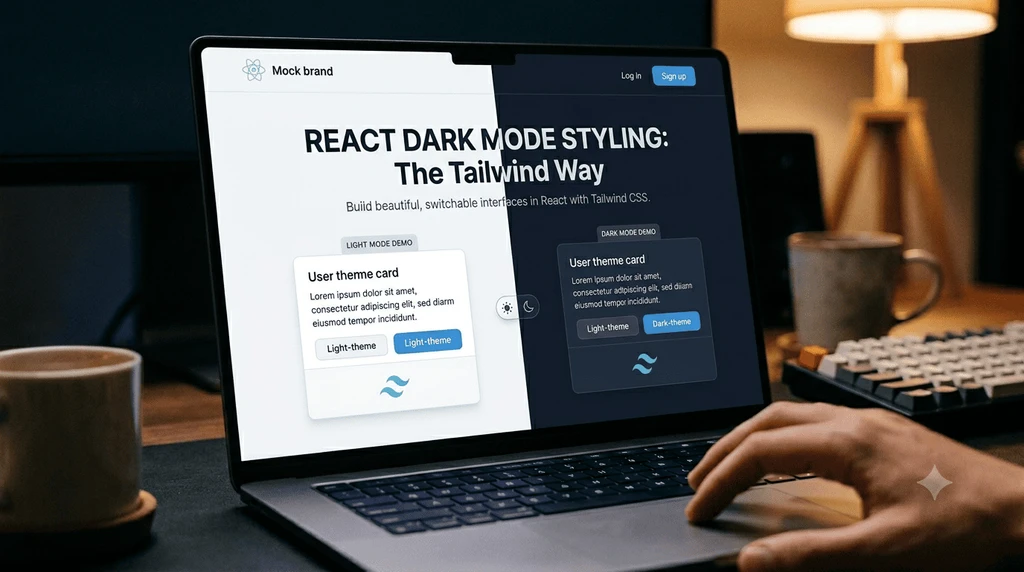
To implement dark mode in React, you dynamically apply a global CSS class (usually .dark) to the root HTML element while managing the theme state via React hooks or Context. Moreover, pairing this with Tailwind CSS styling provides a highly productive developer experience, letting you style components conditionally using simple utility-first classes.
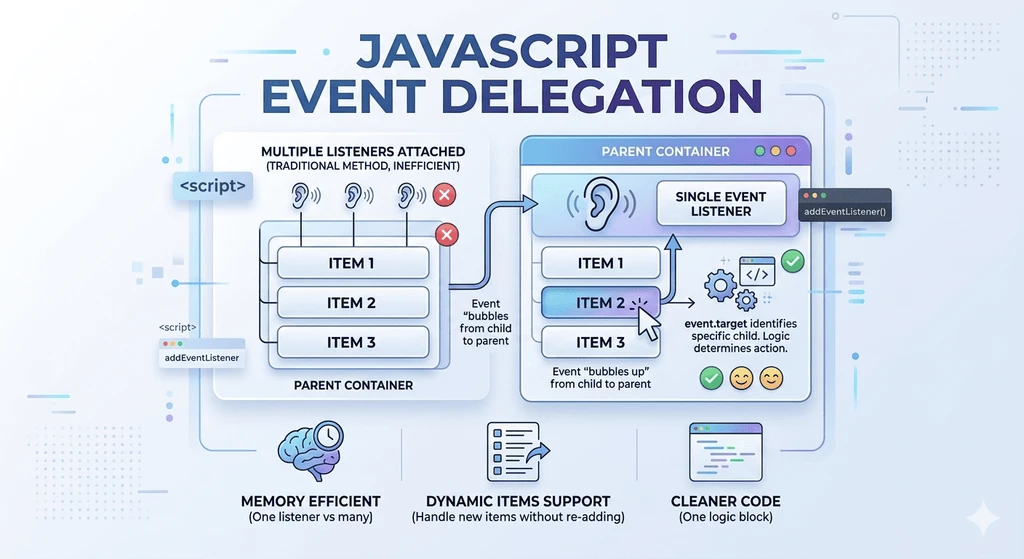
JavaScript Event Delegation is a technique where a parent element handles events for its child elements using event bubbling. Instead of attaching event listeners to many child elements individually, you attach one listener to a common parent and determine which child triggered the event.
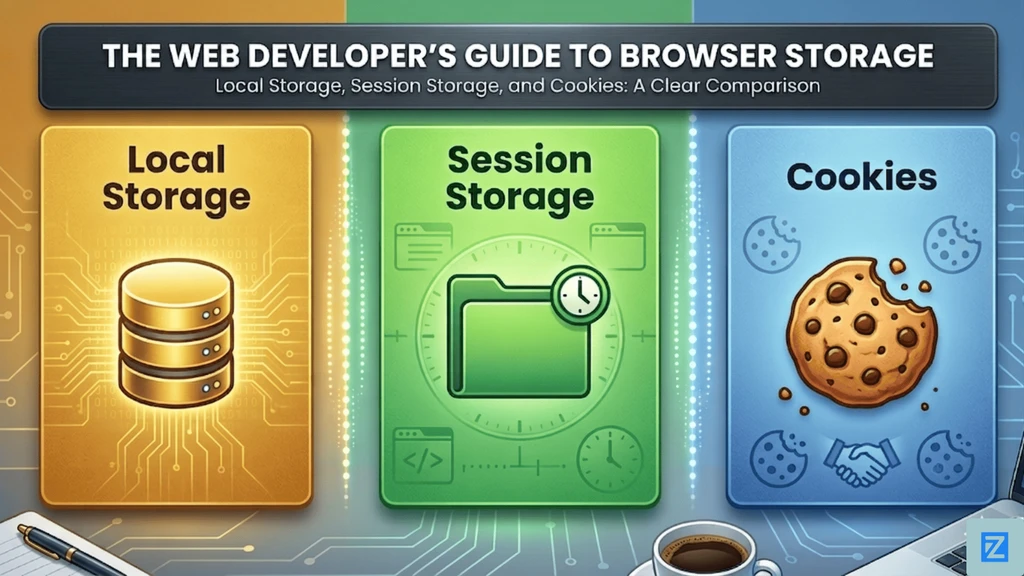
Local storage vs session storage vs cookies is a browser storage comparison that every frontend developer should understand. These three tools all store data, but they differ in lifetime, scope, security, and whether the server can read the data. In modern web development, the right choice depends on whether you need browser-only persistence, tab-only persistence, or server-visible state.
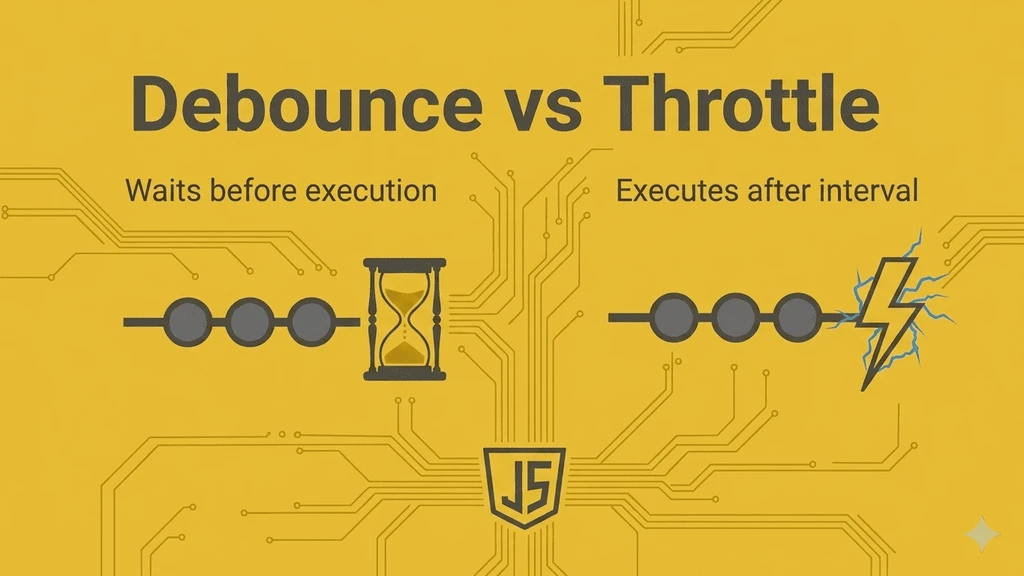
Debounce vs throttle is a core JavaScript concept used to control how often a function runs during repeated events. In frontend development, both help improve performance by preventing excessive function calls during typing, scrolling, resizing, or API requests. The key difference is simple: debounce waits, while throttle limits frequency.